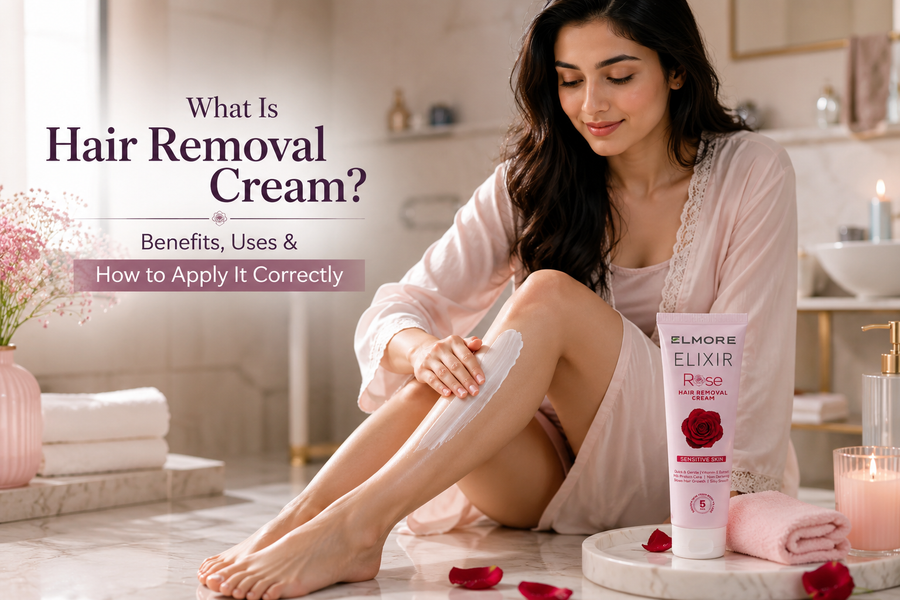
Can Hair Removal Cream Be Used on Sensitive Skin?
A complete safety guide covering patch testing, careful application, aftercare and simple precautions for smoother, more comfortable results.
If you have sensitive skin, removing unwanted hair can feel challenging. Many people worry about redness, irritation or discomfort after using hair removal products.
```The good news is that when used correctly and according to the product instructions, hair removal cream can be a convenient option for many people with sensitive skin. This guide explains how to reduce the risk of irritation and support smooth, comfortable-looking skin.
```Quick Safety Summary
The most important precautions to remember before, during and after application.
What Is Sensitive Skin?
```More Reactive Skin
Sensitive skin is generally more reactive than normal skin. It may become red, dry, itchy or uncomfortable more easily after exposure to certain skincare products, fragrances, environmental conditions or friction.
Extra Care Is Important
Having sensitive skin does not automatically mean that you cannot use hair removal cream. It simply means that you should take extra care when selecting, testing, applying and removing the product.
Is Hair Removal Cream Safe for Sensitive Skin?
```For many people, it can be. Modern hair removal creams are designed to remove unwanted hair close to the skin’s surface without using a razor or pulling hair from the root.
However, every person’s skin is different. A formula that feels comfortable for one person may not be suitable for another. This is why carefully reading the packaging and performing a patch test are essential.
Many cases of discomfort occur when a cream is used incorrectly, such as leaving it on longer than recommended, applying it to damaged skin or repeating the treatment too soon.
How to Perform a Patch Test
```A patch test gives you an opportunity to observe how your skin responds before applying the product over a larger area.
If you notice an unwanted reaction during the test period, avoid applying the product to a larger area.
```Who Should Avoid Using Hair Removal Cream?
```Hair removal cream should not be applied when the skin is already damaged, inflamed or experiencing an active condition.
Never apply hair removal cream to broken, inflamed or visibly irritated skin. Wait until the skin has healed completely before considering treatment.
Tips for Reducing Irritation
```| Recommended | Avoid |
|---|---|
| ✓ Perform a patch test first | × Skipping the patch test |
| ✓ Follow the stated timing carefully | × Leaving the cream on too long |
| ✓ Apply only to clean, dry skin | × Applying over lotions, oils or residue |
| ✓ Rinse the treated area thoroughly | × Leaving cream residue on the skin |
| ✓ Use gentle moisturizing care afterward | × Applying perfume immediately afterward |
Aftercare Matters
```Care for Freshly Treated Skin
Freshly treated skin may temporarily feel more delicate. Gentle aftercare can help support comfort and maintain a soft, healthy-looking appearance.
After rinsing, pat the skin dry rather than rubbing it with a rough towel. Where appropriate, use a gentle moisturizing product suitable for your skin.
For the Next 24 Hours
- Avoid direct or prolonged sun exposure
- Avoid very hot baths or showers
- Avoid strong perfumes on treated skin
- Avoid exfoliating or scrubbing the area
- Wear comfortable clothing over larger treated areas
Hair Removal Cream vs Shaving for Sensitive Skin
```Both methods remove hair close to the surface, but the application experience is different. The most suitable option depends on your skin, personal preference and how carefully each method is used.
| Hair Removal Cream | Shaving |
|---|---|
| No razor blade is used | Razor nicks and cuts may occur |
| Can provide a smooth-feeling finish | Visible or noticeable stubble may return quickly |
| Requires a carefully monitored waiting period | Can be completed immediately |
| Requires a patch test and strict timing | Requires careful blade handling and lubrication |
| Convenient for private at-home use | Usually needs frequent repetition |
Explore Recommended Elmore Collections
```Build a complete personal-care routine with Elmore hair removal, skin care and hair care collections.
Continue Reading
``` ```Frequently Asked Questions
```Can people with sensitive skin use hair removal cream?
Many people with sensitive skin may be able to use hair removal cream successfully by following the product instructions carefully and performing a patch test before using a new formula.
Why is a patch test important?
A patch test helps you observe whether your skin reacts to a specific product before applying it to a larger area.
Should I moisturize after hair removal?
Where appropriate, using a gentle moisturizer after treatment can help keep freshly treated skin feeling soft and comfortable.
What should I avoid after using hair removal cream?
Avoid hot baths, direct sunlight, strong perfumes, unnecessary friction and exfoliation on the treated area for approximately 24 hours or as directed on the packaging.
What should I do if the cream starts burning?
Remove the product immediately and rinse the skin thoroughly with water. Do not continue waiting for the application time to finish if you experience unexpected burning or strong discomfort.
Can hair removal cream be applied to irritated skin?
No. Avoid applying hair removal cream to broken, inflamed, sunburned or visibly irritated skin. Wait until the area has healed completely.
Discover Elmore Hair Removal Cream
```Explore convenient cream-based hair removal options for your at-home personal care routine, and compare them with traditional Elmore Halawa Wax.
```Final Thoughts
```Sensitive skin does not necessarily have to prevent you from enjoying smooth, hair-free results. The key is careful preparation, correct application, strict timing and gentle aftercare.
Always perform a patch test before using a new formula, apply hair removal cream only to healthy skin, remove it immediately if unexpected irritation occurs and follow every precaution printed on the product packaging.
Explore the Elmore Hair Removal Cream Collection and related skin care products to support your personal care routine.
```